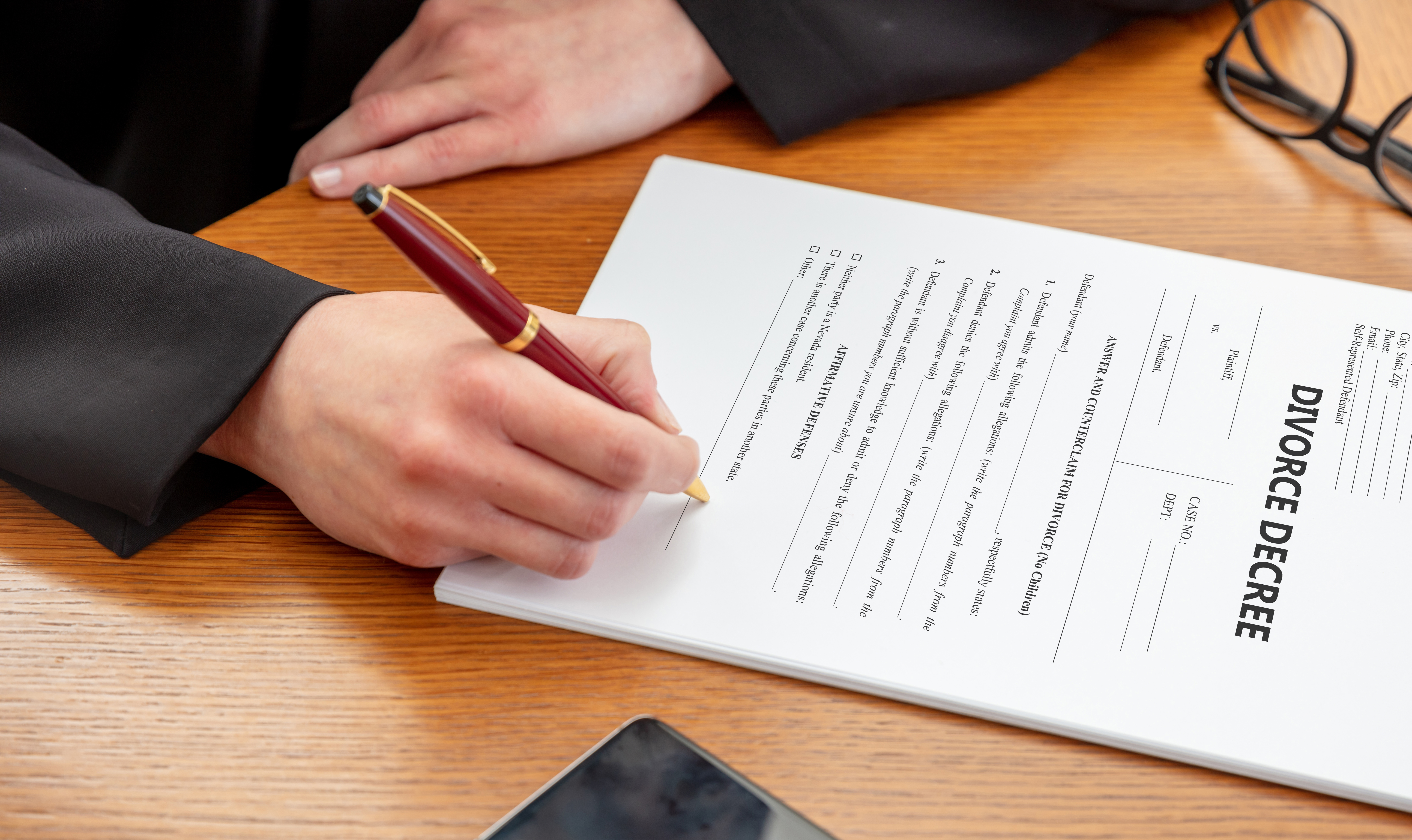
How to Notify a Husband or Wife About Filing For Divorce in Pennsylvania
One of the hardest parts of starting a divorce is deciding how and when to tell your spouse. Many people in Pennsylvania wonder whether they should give a heads‑up before papers are filed, or simply let the formal legal notice speak for itself.
At Cooper Family Law, we regularly help clients in Philadelphia and the surrounding counties plan how to notify a spouse of a divorce filing in a way that balances safety, respect, and legal strategy.
This article explains how Pennsylvania’s rules for serving divorce papers work and the practical options for telling your spouse you are filing. It is general information only, not legal advice for your specific situation.
Emotional Question vs. Legal Requirement
There are really two different questions here:
- Should you tell your spouse you’re filing for divorce?
- How does the law require you to notify your spouse once you file?
Emotionally and practically, it is often better to avoid surprising a spouse with legal papers if it is safe to talk first. But from a legal standpoint, Pennsylvania requires more than a conversation—you must properly “serve” your spouse with the divorce complaint and related forms, using methods approved by the court.
The right approach depends on your safety, your children, and your spouse’s likely reaction.
Should You Tell Your Spouse You’re Filing For Divorce?
There is no Pennsylvania law that forces you to sit down and tell your spouse before filing. However, when there is no history of abuse or intimidation, planning a conversation in advance can have several benefits:
- It may reduce shock, anger, or confusion when the legal papers arrive
- It can set a respectful tone for negotiation about children and finances
- It gives you both a chance to talk about logistics, like living arrangements and bills
On the other hand, if your spouse has a history of violence, threats, or controlling behavior, talking in advance may not be safe. In those situations, it can be safer to file quietly, secure housing and finances, and then let the legal service of papers be the formal notice.
A local family law attorney can help you craft a plan that balances respect, safety, and legal strategy.
Legal Notice: Serving Divorce Papers in Pennsylvania
Once a divorce complaint is filed, Pennsylvania law requires that your spouse receive a copy. This is called service of process, and it is what officially notifies your spouse that the case exists.
In most Pennsylvania cases, the plaintiff must serve not only the divorce complaint itself, but also the “Notice to Defend and Claim Rights,” the counseling notice, and any other documents filed with the complaint. These documents explain your spouse’s rights and obligations in plain language and are a required part of proper notice.
Key points:
- You cannot serve the papers yourself. Someone who is at least 18 and not a party to the case must handle service, or you must use the sheriff or other court‑approved method.
- In general, the complaint and “Notice to Defend” must be served within 30 days after filing if your spouse is in Pennsylvania (longer if they are out of state).
- After service, you must file an affidavit or proof of service with the court to show that the rules have been followed.
- In many cases, you must complete what the rules call “personal service,” using one of several approved methods to get the complaint, Notice to Defend, and counseling notice into your spouse’s hands and then file proof that it was done correctly.
If the service is not properly completed, the court may not allow your case to proceed.
Approved Methods for Sending a Divorce Notice to Your Spouse in Pennsylvania
Here is how Pennsylvania law typically allows you to notify your spouse, whether husband or wife, that you filed for divorce.
1. Personal service (in‑person delivery)
One of the most common methods is personal service, where your spouse receives the papers directly from:
- A county sheriff or other authorized officer
- A professional process server
- Another competent adult who is at least 18, is not you, and is willing to complete an Affidavit of Service stating when and where they handed over the documents, if local rules permit
This can be a respectful choice if your spouse already knows divorce is coming, because the server can quietly hand them the documents without drama.
2. Service by mail
In many Pennsylvania counties, including those around Philadelphia, it is also possible to serve divorce papers by mail using specific methods, such as:
- Certified mail, restricted delivery, return receipt requested
- Other forms of mail that require your spouse’s signature
If your spouse signs for the mailing, the green return‑receipt card or postal confirmation serves as proof that they received the complaint.
3. Alternative or special service
Sometimes a spouse cannot be found or persistently avoids service. Pennsylvania rules allow alternative methods of service, but only with the court’s approval.
Depending on the county and your judge, this might include:
- Serving a relative or another responsible adult at your spouse’s last known address
- Posting or publishing a notice in a newspaper or legal journal
- Other creative solutions tailored to your circumstances
In Philadelphia, local rules and administrative materials explain that if you cannot serve your spouse in a standard way, you may need to file a formal request (motion) asking the court to approve an alternative method.
4. Acceptance of Service (when your spouse cooperates)
In some Pennsylvania cases, your spouse may be willing to sign an “Acceptance of Service” form instead of being served by a sheriff or process server. This simple document confirms receipt of the divorce complaint, Notice to Defend, counseling notice, and any other documents filed.
Many counties then require you to sign an “Affidavit of Signature,” swearing that the signature on the Acceptance of Service is actually your spouse’s. When available, this option can be a low‑conflict way to handle service when both spouses are cooperating.
These methods of personal service, mail service, Acceptance of Service, and court‑approved alternatives are the most common ways to legally notify a spouse of a divorce filing in Pennsylvania, and service is a crucial step. Your case cannot move forward until it is done properly.
How to Serve Your Spouse with Divorce Papers
Whether your spouse is a husband or wife, the basic process is the same under Pennsylvania law. Here is a practical sequence you can follow with your attorney:
- Talk about safety and timing first. Before serving papers, discuss with your lawyer or advisor whether it is safer to talk to your spouse ahead of time or to let the formal service be their first notice. In relationships with a history of intimidation or violence, it may be safer to skip the advance conversation and build a safety plan around service instead.
- File the divorce complaint in the correct county. Your complaint is usually filed in the county where you or your spouse lives, or in Philadelphia if you meet the local requirements and choose to file there. Filing in the proper court matters because each county has its own procedures and forms.
- Choose a service method that fits your situation. With your attorney, decide whether to use the sheriff, a private process server, or certified mail. Some counties rely heavily on sheriffs for personal service, while others use process servers or mail more frequently. Think about practical issues, like whether you want papers delivered at home or at work and whether children might be present.
- Let the server or mail do the talking. The server will hand your spouse the papers, or the postal service will deliver them. You do not need to be present, and in many cases, it is better that you are not, especially if emotions are high or you want to limit conflict in front of children.
- File proof of service with the court. After your spouse is served, your lawyer (or you, if you are self‑represented) files a proof of service or affidavit with the court. This document tells the judge when, where, and how your spouse was notified, and it allows the case to move forward.
- If your spouse cannot be found or is avoiding service, explore alternatives. If your spouse has moved without leaving a forwarding address, is out of the country, or repeatedly refuses to accept delivery, your attorney can help you document your efforts and request permission from the court to use an alternative service. This might involve serving another responsible adult at their last known address or publishing a notice, depending on what the judge allows.
- Adjust the plan if your spouse is the primary caregiver or lives with you. When your spouse still lives in the shared home or is the primary caregiver for your children, it can help to coordinate services so that the children are not present and the moment of service is as calm as possible. In some cases, a quiet conversation followed by certified mail service may feel less confrontational than a sheriff at the door.
What if My Spouse Refuses to Open or Sign for the Papers?
A common worry is: “What if my spouse refuses to sign for the mail or just won’t cooperate?”
- If your spouse refuses to accept certified mail, you may need to switch to personal service by a sheriff or process server.
- If your spouse refuses to open the envelope but you can prove they received it, the court may still treat service as valid, depending on the method and local rules.
- If your spouse cannot be found despite reasonable efforts, you can ask the court for permission to use alternative service, such as publication.
Courts in Philadelphia and the surrounding counties are accustomed to these situations and have procedures to address them; the key is to document your efforts and follow the rules carefully.
How Long Does My Spouse Have to Respond After Being Served?
Under Pennsylvania practice, a spouse who is served with a divorce complaint generally has 20 days to respond, and if they do not, a follow‑up notice may provide an additional period before the case can proceed toward a default.
This timeline gives your spouse an opportunity to:
- Consult with their own attorney
- Decide whether to contest the divorce or specific issues
- Begin gathering their own financial and legal information
Even if your spouse chooses not to respond, the court can eventually move ahead with the case once proper notice has been proven.
When You Should Not Tell Your Spouse in Advance
There are situations where not telling your spouse ahead of time is safer and more realistic, such as when:
- There has been physical abuse, threats, or stalking
- Your spouse tightly controls money, documents, or access to children
- You fear that telling them might trigger violence or attempts to hide assets
In these cases, it may be safer to:
- Quietly consult with a lawyer or legal aid office
- File for divorce and, if needed, request emergency or long‑term PFAs
- Use law enforcement or sheriffs to handle service, and develop a safety plan for the days around service
Your physical safety and your children’s safety should always come before courtesy.
How an Attorney Can Help with Notice and Service
Serving divorce papers the right way affects timelines, default options, and the overall tone of your case. The right approach depends on your safety, your children, and how likely your spouse is to cooperate or avoid service. A Philadelphia divorce attorney can help you decide whether to talk with your spouse before filing, how to handle service once the complaint is filed, and what to do if your spouse cannot be found or refuses to accept notice.
At Cooper Family Law, our practice focuses on family law matters in Philadelphia and the surrounding counties, and we regularly guide clients through the first steps of filing and serving divorce papers.
If you are unsure how to tell your spouse you are filing for divorce, or how to legally notify your spouse under Pennsylvania law, Cooper Family Law can help you develop a clear, safe plan that fits your situation and goals.