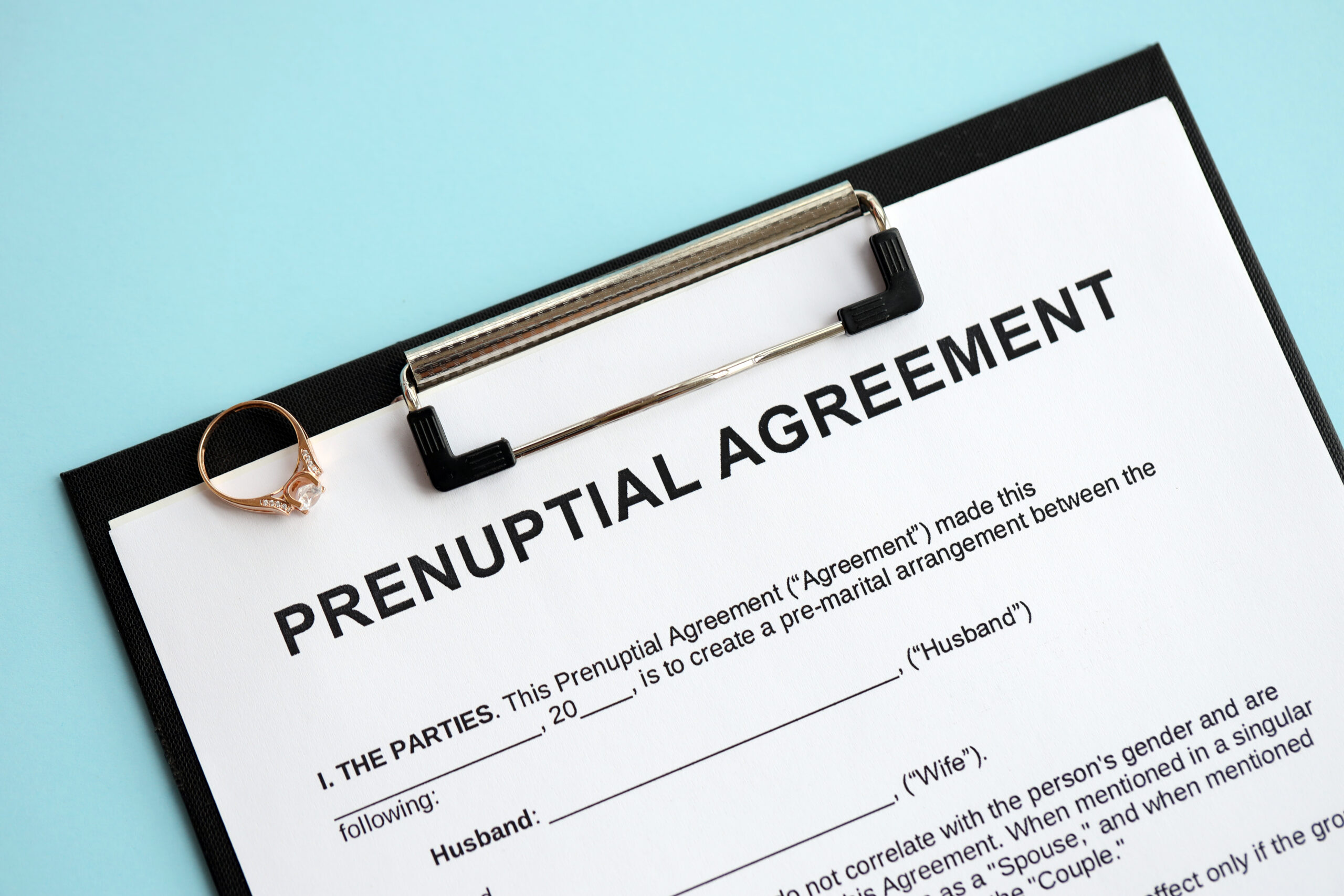
Getting engaged usually starts a long list of decisions.
Where will you live? How will you combine finances? Who will pay which expenses? Will either person change careers? Are children part of the plan?
For some couples, another question belongs on that list: Should we have a prenuptial agreement?
You do not have to be extremely wealthy to have a reason to consider one.
A prenuptial agreement can help prospective spouses discuss assets, debts, businesses, property, and other financial expectations before marriage. It can also establish certain rights and obligations if the marriage later ends through divorce or death.
Under Pennsylvania law, a premarital agreement is an agreement between prospective spouses made in contemplation of marriage that becomes effective upon marriage.
Whether you actually need one depends on your circumstances, goals, and what each person wants to address.
Quick Check: Might a Prenup Be Worth Discussing?
Consider whether any of these sound familiar:
- You own a home or expect to purchase one before marriage.
- You have savings, investments, retirement accounts, or other meaningful assets.
- You or your fiancé carries significant debt.
- One of you owns a business or professional practice.
- You expect an inheritance or have received family wealth.
- Either of you has children from a previous relationship.
- One person has substantially greater assets or income.
- You are entering a second or later marriage.
- You want to keep certain premarital assets separate.
- You want to decide how property acquired during the marriage will be handled.
- You want greater transparency about finances before getting married.
- You simply prefer making financial decisions together now rather than leaving them entirely to Pennsylvania divorce law later.
None of these situations automatically means you need a prenup.
They do mean that a conversation may be worthwhile.
1. You Own a Home or Other Property Before Marriage
Owning property before marriage is one of the most common reasons to ask about a prenup.
Under Pennsylvania law, property acquired before marriage is generally excluded from marital property. But the analysis does not always stop with the asset’s original value. Pennsylvania’s statutory definition of marital property can include the increase in value of certain nonmarital property during the marriage, subject to valuation rules.
That distinction can matter significantly.
Suppose you own a Philadelphia rowhome, a condominium, investment property, or another asset before getting married. The property itself may begin as nonmarital property, but questions can arise later about:
- Appreciation during the marriage
- Mortgage payments
- Improvements made during the marriage
- Retitling property
- Contributions from the other spouse
- What happens to the property if the marriage ends
A properly drafted prenuptial agreement can address how the couple intends to treat property brought into the marriage rather than waiting for those questions to arise years later.
2. One or Both of You Have Significant Assets
A prenup can be valuable when one person has considerably more wealth, but the concept is broader than multimillion-dollar estates.
Assets can include:
- Savings
- Brokerage accounts
- Retirement accounts
- Real estate
- Stock or equity compensation
- Valuable personal property
- Intellectual property
- Ownership interests in businesses
- Other investments
Pennsylvania generally presumes that property acquired during marriage is marital property unless a statutory exclusion applies. Importantly, marital property can exist regardless of whether an asset is titled in one spouse’s name or jointly.
That surprises some couples.
A prenup can establish how particular assets will be characterized and treated if the marriage ends.
3. One of You Owns a Business, or Plans to Start One
Business ownership adds another layer of complexity.
A business may have been created before marriage, during marriage, or built from a combination of premarital and marital efforts.
Potential issues can include:
- The value of the business when the marriage begins
- Growth in value during the marriage
- Ownership interests
- Business income
- Contributions by either spouse
- Whether one spouse works for the business
- How the business would be valued in a divorce
- Whether a divorce could affect other owners or family members
Because Pennsylvania marital property can include increases in value of certain nonmarital assets, someone who enters a marriage with an existing company should not assume that simply owning it beforehand resolves every future property question.
A prenuptial agreement can establish expectations about the business before those interests become more valuable or more complicated.
For business owners, the objective is often not simply “protecting the business from a spouse.” It may also be about protecting continuity, reducing valuation disputes, and avoiding uncertainty for employees, partners, or family members who have interests in the company.
4. Either Person Is Bringing Significant Debt Into the Marriage
Prenuptial planning is not only about assets.
Debt matters too.
An engaged couple may be dealing with:
- Student loans
- Credit card balances
- Business debt
- Mortgages
- Personal loans
- Tax obligations
- Other financial liabilities
Pennsylvania’s premarital-agreement statute specifically refers to disclosure of both property and financial obligations when addressing enforceability.
That is a good reminder that financial transparency should include both sides of the balance sheet.
A prenup can help clarify how particular debts will be treated and can prompt a broader conversation about how the couple plans to manage financial obligations during the marriage.
Even when debt is clearly separate, understanding what each person owes before the wedding can reduce unpleasant surprises later.
5. You Expect an Inheritance or Have Family Wealth
Property acquired by gift, bequest, devise, or descent is generally excluded from Pennsylvania’s definition of marital property, subject to important exceptions and valuation rules. Pennsylvania law can nevertheless treat the increase in value of certain nonmarital property as marital property.
This may matter when family wealth involves:
- An expected inheritance
- Family-owned real estate
- Trust interests
- Interests in a family business
- Investment portfolios
- Valuable property passed through generations
A prenup can clarify how the couple intends to treat those interests.
It can also be useful when parents or other family members want a business or property to remain within a particular family line.
The legal analysis can become more complicated when inherited or gifted property is commingled, retitled, or used in ways that change how ownership is characterized. That is why individual legal advice matters rather than relying on a simple rule that “inheritances are always protected.”
6. One or Both of You Have Children From a Previous Relationship
A second marriage often combines two sets of family and financial responsibilities.
Someone entering a later marriage may be thinking about both a future spouse and children from a previous relationship.
Questions can include:
- Which assets should remain available for children?
- Which assets will be shared with the new spouse?
- How should an existing home be handled?
- How should estate planning coordinate with the prenup?
- What rights should each spouse have if one dies?
- How should financial responsibilities from prior relationships be considered?
A prenup can be one part of that planning.
But it should not be treated as a replacement for an estate plan.
For couples with children from prior relationships, it is particularly useful to coordinate a prenuptial agreement with wills, powers of attorney, beneficiary designations, trusts when appropriate, and other estate-planning documents.
That helps prevent one document from working against another.
7. You Simply Want Financial Clarity Before Marriage
This reason is easy to underestimate.
You may not own a company.
You may not have millions of dollars.
Neither of you may expect a large inheritance.
You can still benefit from having a serious conversation about money before marriage.
A prenup process can require couples to discuss matters they otherwise might avoid:
- What each person owns
- What each person owes
- Whether finances will be combined
- How certain property should be treated
- Expectations involving a home
- Business interests
- Savings and retirement
- Financial responsibilities
- What each person expects if the marriage ends
Pennsylvania’s enforcement rules make financial disclosure particularly relevant. Section 3106 provides that a person challenging a premarital agreement can seek to establish unenforceability based on specified deficiencies involving fair and reasonable disclosure, lack of written waiver of additional disclosure, and lack of adequate knowledge of the other person’s property or financial obligations.
In that sense, the prenup conversation can serve another purpose: Both people begin the marriage with a clearer understanding of their financial picture.
You Do Not Have to Be Wealthy to Consider a Prenup
The stereotype of a prenuptial agreement is an extremely wealthy person trying to shield a fortune.
That is one possible scenario, but it is far from the only one.
Consider a couple in their early 30s.
One owns a Philadelphia home purchased before the relationship. The other has student debt. Both have retirement accounts. One is beginning to build a business.
Neither considers themselves wealthy.
But there are already meaningful questions about property, debt, appreciation, future income, and financial expectations.
That is exactly the kind of situation where discussing a prenup may make sense.
The issue is not simply how much you have today.
It is also what you may build during the marriage and whether you want greater predictability about how particular financial issues would be handled.
What Happens If You Divorce Without a Prenup in Pennsylvania?
If a marriage ends without an enforceable agreement addressing property rights, Pennsylvania’s Divorce Code generally supplies the rules.
The first question is what property is marital and what is nonmarital.
Under 23 Pa.C.S. § 3501, marital property generally includes property acquired by either spouse during the marriage, along with the increase in value of certain nonmarital property. The statute contains several exclusions, including certain premarital property, gifts and inheritances, and property expressly excluded by a valid agreement between the parties.
Once marital property is identified, Pennsylvania uses equitable distribution.
Does Equitable Distribution Mean 50/50?
No. Pennsylvania law requires courts to divide marital property in percentages and in a manner the court determines to be equitable after considering the statutory factors. The statute specifically says this occurs without regard to marital misconduct.
Factors include:
- Length of the marriage
- Prior marriages
- Age and health
- Income and sources of income
- Vocational skills and employability
- Assets, liabilities, and financial needs
- Contributions to the other spouse’s education or increased earning capacity
- Opportunities for future acquisition of assets and income
- Contributions to acquiring, preserving, depreciating, or appreciating marital property
- The economic circumstances of each spouse
- Other statutory considerations
The result may be 50/50 in a particular case, but Pennsylvania law does not begin and end with an automatic equal split.
A valid prenuptial agreement can allow a couple to establish certain property arrangements themselves instead of relying exclusively on that default process.
Pennsylvania’s definition of marital property specifically excludes property that the parties have excluded by a valid agreement entered into before, during, or after marriage.
What Can a Pennsylvania Prenup Address?
The appropriate terms depend on the couple.
A prenup may address issues involving:
- Identification of separate property
- Treatment of property acquired during marriage
- Real estate
- Business interests
- Responsibility for particular financial obligations
- Rights involving certain investments or accounts
- Property division if the marriage ends
- Alimony or other economic rights, depending on the terms and circumstances
- Certain rights involving an estate or death
Pennsylvania law generally recognizes agreements between spouses concerning economic matters and provides mechanisms for their enforcement. In the absence of language providing otherwise, agreements concerning existing property rights, alimony, alimony pendente lite, counsel fees, or expenses generally are not subject to later court modification in the same way that custody and child-support provisions are.
That is one reason the wording matters.
A prenup can create rights and waivers with consequences many years later.
Can a Prenup Decide Child Custody or Child Support?
A couple should not assume a prenup can permanently decide future custody or child support.
Pennsylvania law specifically provides that agreement provisions involving child support, custody, or visitation remain subject to modification by the court upon changed circumstances.
Custody decisions ultimately focus on the child’s best interests, while child support is governed by Pennsylvania support law and guidelines.
So even if prospective spouses discuss future children as part of their broader planning, a prenup should not be viewed as a way to permanently predetermine what custody or support will look like years later.
That distinction is especially important when couples use online forms that attempt to address every imaginable future issue in one document.
What Makes a Prenuptial Agreement Enforceable in Pennsylvania?
Pennsylvania law does not simply ask whether both people signed something labeled “Prenuptial Agreement.”
Under 23 Pa.C.S. § 3106, the person trying to set aside a premarital agreement carries the burden of proving unenforceability by clear and convincing evidence.
The statute identifies two principal avenues.
The challenging party may prove that:
- The agreement was not executed voluntarily; or
- Before signing, the party:
- was not given fair and reasonable disclosure of the other person’s property or financial obligations;
- did not voluntarily and expressly waive, in writing, the right to additional disclosure beyond what was provided; and
- did not have adequate knowledge of the other person’s property or financial obligations.
Pennsylvania appellate courts also treat premarital agreements as contracts. In a 2022 Superior Court decision involving a challenge to an agreement, the court reiterated the statutory burden and upheld the agreement after considering evidence concerning disclosure and the parties’ knowledge.
These requirements are one reason careful drafting and financial disclosure matter.
Do You Need Separate Lawyers for a Prenup?
Pennsylvania’s Section 3106 does not state that each prospective spouse must have separate counsel for every prenuptial agreement to be enforceable.
That does not mean independent legal advice lacks value.
A prenuptial agreement can involve substantial rights concerning property, alimony, businesses, inheritance planning, and future financial claims. One attorney cannot advocate for two people whose legal interests may differ.
Having an opportunity to obtain independent advice can help each person understand:
- What the agreement says
- What rights may be waived
- What Pennsylvania law would otherwise provide
- Whether the proposed terms match that person’s goals
- What financial information has been disclosed
This is particularly important when one person has substantially greater assets, a family business, or a proposed agreement with significant waivers.
When Should You Start the Prenup Process?
Earlier is better.
Pennsylvania’s statute focuses on whether an agreement was executed voluntarily rather than setting a universal number of days before the wedding when a prenup must be signed.
Even so, waiting until the wedding is days away is rarely a good planning strategy.
Starting early gives both people time to:
- Identify their goals.
- Gather financial information.
- Review proposed terms.
- Ask questions.
- Obtain independent legal advice when appropriate.
- Negotiate revisions without unnecessary time pressure.
- Sign the final agreement well before wedding logistics take over.
If you are already discussing venues and invitations, it is not too early to discuss financial planning.
What Financial Information Should You Gather?
Before discussing a prenup, it can help to develop a clear picture of each person’s finances.
Consider gathering information concerning:
- Real estate
- Bank accounts
- Investment accounts
- Retirement accounts
- Business interests
- Stock or equity compensation
- Life insurance with cash value
- Significant personal property
- Mortgages
- Student loans
- Credit card debt
- Business obligations
- Tax liabilities
- Other significant assets or debts
The purpose is not to make the process unnecessarily invasive.
Financial disclosure helps both parties understand the agreement they are considering, and Pennsylvania law makes disclosure and knowledge relevant when enforceability is later challenged.
Can You Create an Agreement After You Are Already Married?
Potentially, yes.
Pennsylvania also recognizes agreements entered into during marriage. Section 3501 expressly recognizes valid agreements entered into before, during, or after marriage when determining whether property has been excluded from the marital estate.
An agreement made after marriage is generally referred to as a postnuptial agreement.
But couples should not assume the process and legal considerations are identical to signing a prenup before marriage.
If you are already married and want to establish or clarify financial rights, discuss whether a postnuptial agreement is appropriate for your circumstances.
How Does a Prenup Work With an Estate Plan?
These documents should be coordinated.
A prenuptial agreement may address financial rights between spouses, while an estate plan can involve:
- Wills
- Trusts
- Powers of attorney
- Beneficiary designations
- Planning for children
- Decisions about property after death
This is particularly important for second marriages and blended families.
A prenup might establish that a particular asset remains separate, while a will or trust determines what ultimately happens to that property at death.
Looking at those documents together can help identify inconsistencies before they become disputes.
For couples who created estate plans before getting engaged or married, marriage itself is also a good reason to review those documents.
Questions to Discuss Before Asking an Attorney to Draft a Prenup
You do not need to arrive at the first legal meeting with every term decided.
It can help, however, to discuss some basic questions with your fiancé:
- What property does each of us currently own?
- What debt does each of us currently owe?
- Are there assets either person particularly wants to keep separate?
- Does either person own a business?
- Are inheritances or significant family assets involved?
- Will either person likely leave the workforce or reduce work for children?
- Do we expect to purchase a home together?
- How do we generally plan to manage finances during the marriage?
- Are there children from previous relationships whose interests require additional planning?
- How should the prenup coordinate with our estate plans?
- What do we each want to accomplish with the agreement?
The goal does not have to be protecting one person from the other.
For many couples, the better goal is creating enough financial clarity that both people understand what they are agreeing to before they marry.
A Prenup Is Financial Planning Before Marriage
A prenuptial agreement does not predict whether a marriage will succeed.
It answers a different question: Are there financial issues we would rather understand and decide together now than leave unresolved?
For some couples, the answer is no.
For others, especially those entering marriage with property, debt, businesses, children from prior relationships, or significant differences in finances, the discussion can provide valuable clarity.
Cooper Family Law helps individuals and couples throughout Philadelphia, Delaware, Bucks, Montgomery, and Chester Counties understand prenuptial and postnuptial agreements under Pennsylvania law.
If you are engaged or preparing for marriage and want to understand whether a prenuptial agreement makes sense for your circumstances, schedule a confidential consultation to discuss your options.
Family Matters. Experience Counts.